Can wifi home cameras be hacked?
There is no doubt that smart home security systems are better than traditional local alarm systems. They allow us to watch live footage from our homes, talk to visitors, and even get alerts when our motion sensors go off. However, the major disadvantage of these Internet-connected systems is that they are as hackable as anything connected to the ‘Net. Are they safe to use despite this scary prospect? Overall, we say yes, but let’s back up a bit.
Can a home security system be hacked?
Ultimately yes, any device connected to the internet can be hacked, but the chances of a security system being hacked are slim, especially with digital security best practices in place. But we’ll get to that a little later.
What makes security systems and cameras vulnerable to hacking?
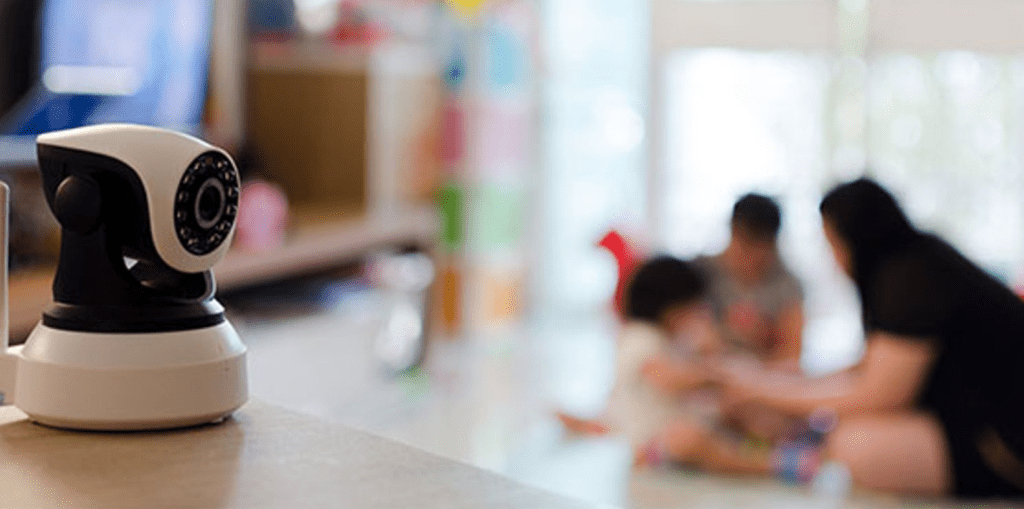
There are many factors that make smart security systems and smart security cameras vulnerable to hacking, some within the user’s control and some beyond the user’s control.
- Lack of passwords: If the security system app does not have a password that is long, complex and unique to the account, there is a risk of system hacking. Unfortunately, our study of America’s password habits found that nearly half of Americans only use passwords of eight characters or less, making it easy for hackers to guess. To see if your password is strong, use our tool, How Secure is Your Password?
- Lack of authentication: Even with strong passwords, accounts can still be hacked if advanced authentication isn’t set up. Two-factor authentication requires an additional passcode sent to the mobile device while biometric authentication requires a fingerprint or facial recognition, preventing unauthorized access.
- Data Breach: Sometimes, a company goes through a data breach where a hacker breaks into its system and steals user credentials. For example, in 2019, there was a data breach at Ring that affected more than 3,000 users.1 This led to people logging into other people’s accounts and watching their live footage, which Clearly a huge breach of privacy. In response, Ring mandated two-factor authentication and urged users to change their passwords as soon as possible.
- Lack of encryption: Not to come down too hard on color, but another problem they had was the lack of encryption, meaning the data was visible to both the user and the receiver without a secret handshake or key exchange. Although the user cannot do anything about encryption, we recommend shopping for systems that have end-to-end encryption built in by Jump. And note that Ring also finally added end-to-end encryption to all of its camera devices, justifying the need for encryption in the first place.
- Lost devices: Finally, lost devices, such as a mobile phone or tablet without a passcode, can allow people easy access to home security systems and camera surveillance.
How easy is it to hack security systems?
First, let’s define hacking, a term that most of us recognize but may not fully understand. Hacking occurs when people break into computer systems by exploiting vulnerabilities, with the hopes of:
- Blocking access to the system
- Accessing other devices in the same network
- Data collection.
- There is no clear answer that we can give you as to how easy it is to hack security systems, as it depends on the system itself. If it doesn’t require or require passwords or advanced authentication, it’s easier to hack than this system. Data breaches also make hacking easier, as does a lack of encryption. However, a security system that follows the above best practices is not easily hacked (though again, anything connected to the web is technically vulnerable to hacking).
How Hacks Happen: Types of Security System Attacks
How do hacks happen, exactly?
- Phishing: The easiest and most common method of hacking is through social engineering, which is a great way to ask for people’s usernames and passwords. Social engineering phishing occurs through emails or text messages that impersonate legitimate websites. When people click on phishing links, they are taken to fake website login pages, where they type in their credentials, unwittingly giving them away to hackers.
- Programming Attacks: While phishing is the most common cause of security system hacks, we can’t count out programming. Programming-based hacks are more difficult than phishing, as they require full administrative privileges to assess system vulnerabilities.
- Brute-force attacks: Brute-force attacks occur when a hacker guesses a user’s password only until they can log in. Note that many online accounts block access after a certain number of attempts, making these attacks quite old.
- Man-in-the-Middle Attacks: In contrast, man-in-the-middle attacks are based on programming. In essence, a hacker needs to capture data packets, intercept the sender and receiver, and “listen” for login credentials to obtain passwords.
- Physical Access: Finally, physical access means that a hacker can physically gain access to a device on a long-term basis, gaining access to, well, sensitive information.
How to Identify Hacked Security Systems
How do you know when you’ve been hacked? Here are some important red flags to watch out for:
- Unidentifiable noise is coming from your camera’s speakers.
- Your camera’s LED lights are on unexpectedly.
- Your cameras pan and/or tilt unexpectedly
- Your password stops working, but you haven’t changed it.
- Your account was accessed on an unknown device.
- It’s important to keep an eye out for these red flags, as hacking security systems and cameras is a huge breach of privacy above all else.
Types of Security Systems
Obviously, the safest security system against hacking is a local alarm system, but that won’t work for modern users who want notifications and apps. However, there are some intermediate grounds that give the user the option to use the Internet or not. For example, many Reolink cameras do not require Wi-Fi. Rather, they record directly to their microSD cards, which can only be hacked if they are physically stolen.
But if you want to be alerted when any of your alarms or sensors go off, look for a system with the required password, authentication, and end-to-end encryption. And, if you’re concerned about someone hacking into your electrical system to disable your security sensors and cameras, battery-powered devices may be your best bet. Alternatively, look for a system with cellular or landline backup that will keep running even during a power outage. There are many different types of security systems, and there are no hard and fast rules about which types are the most secure. Regardless, here’s an overview of the main types of systems:
DIY Security Systems: DIY security systems mean that consumers install them themselves, an increasingly popular option in the smart home security market. Users will typically monitor these systems themselves through their respective mobile apps, although professional monitoring may also be an option.
Wireless security systems: Wireless security systems mostly have battery-powered components that do not rely on the home’s electrical system. However, many users prefer to include a landline or cellular backup in case Wi-Fi fails.
Professional security systems: Last but not least, professional security systems are either professionally installed, professionally monitored, or both.
At the end of the day, it’s not the type of security system that determines how susceptible it is to hacking, but the security measures that both the company and the user implement to prevent hacker access.
Vulnerability of security systems to hacking
While we don’t want you to add security system hacks to your list of biggest fears, some recent hacks have stuck in our memory and the entire smart home market in general. In particular, ADT, SimpliSafe and Ring Alarm have all experienced hacking to varying degrees, and although each company has taken steps to combat these attacks, we still want our readers to be aware of their complicated histories. should be done
ADT: ADT is by far the most recognized and trusted name in smart home security, with more than 140 years in business. However, even this security vanguard could not prevent hacking from happening — basically, as they say in the movies, “the call was coming from inside the house”. By this, we mean that a former ADT installer never knowingly removed his personal email address from a system account after the setup was finished so he could spy on users at home. However, the installer pleaded not guilty and ADT is addressing the concerns of all affected customers, 3 so this physical access hack is far from a common occurrence for ADT. To learn more, read our ADT review.
Securing your home security cameras from hackers is an essential step if you are going to bring these recording devices into your home. If you can access your camera over the Internet, someone else can theoretically access or “hack” it. Thankfully, there are some simple steps you can take to protect your security cameras from hacking so you don’t have to sacrifice the benefits. Having a surveillance camera protecting your home for fear that your private moments will be shared on the Internet in high definition video.
To protect your cameras from hackers:
- Choose a router with Wi-Fi Protected Access (WPA) or Wi-Fi Protected Access 2 (WPA2) security, which encrypts your data.
- Enable your cameras’ built-in firewall, which monitors and controls information to and from the camera. Instructions for doing this will be included with your cameras.
- Protect your cameras with a strong password. If your cameras come with default passwords, change them immediately.
- Secure your Wi-Fi router with a strong password (different from your cameras).
- If two-factor authentication is offered, turn it on. (All home security camera companies in our ranking require two-factor authentication.)
- Keep your camera’s firmware up to date.
- Use your cameras’ geofencing capabilities to lock them when you’re home. Instructions for doing this will be included with your cameras.
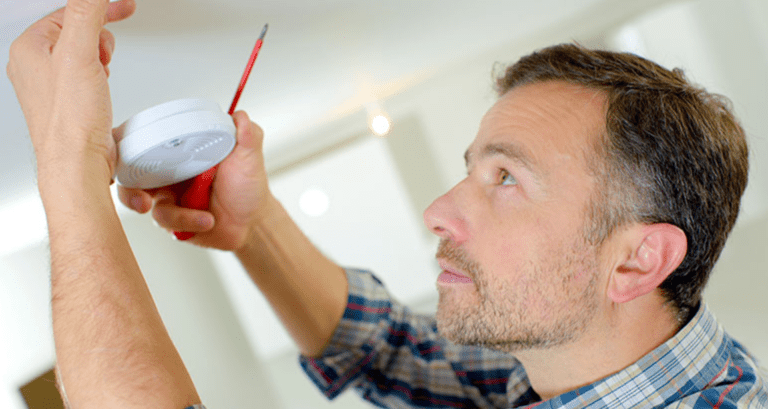
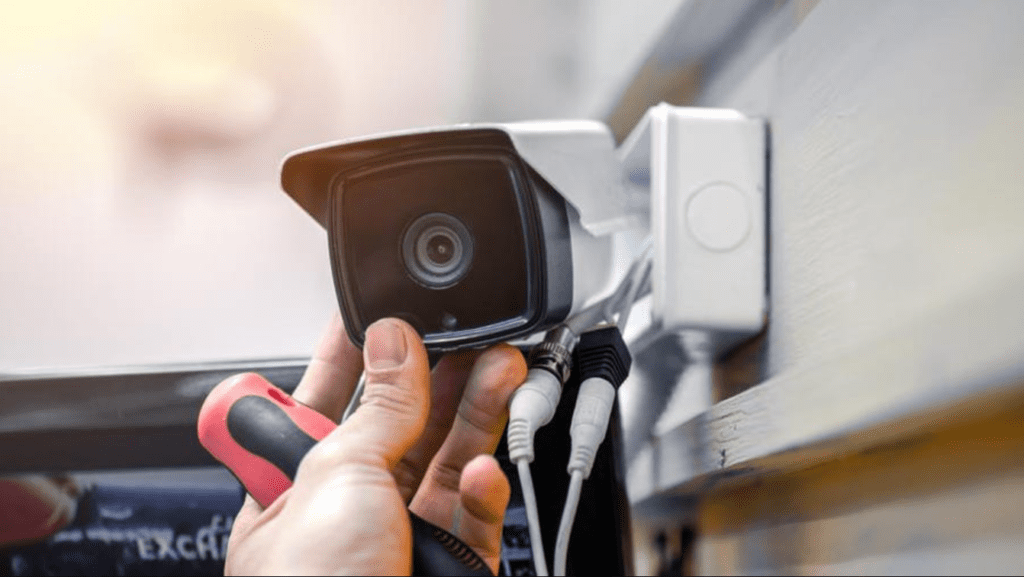
- A man is installing a security camera inside a house.
- (Gordinkov)
Can Home Security Cameras Be Hacked?
Any device connected to the Internet can be hacked, and that includes home security cameras. Wired cameras are less vulnerable than Wi-Fi cameras, and less vulnerable than cameras with local storage that store video on a cloud-based server. However, all cameras can be hacked. This can allow someone to see you, listen to you and record your activities without your knowledge. They can potentially access any other devices on your home network, such as your computer or smartphone.
“All security cameras are vulnerable,” says Arup Mukherjee, a software engineer for 25 years and founder of Camact, a smart network video recorder designed to make security cameras more secure. “The brand of the camera and how it’s configured on the network are the most important risk factors. Some manufacturers are more security conscious than others, and if you take the proper precautions, having a security camera in your home is a good idea.” Most of the risk can be mitigated. on your network.”
Most home security camera hacks are not the fault of the camera company. This is usually because homeowners used the same password on another site and the database was breached, or because they did not change the default password on the camera. What happened when they bought it? That’s what Ring alleges happened in the famous case of a Ring camera in a teenage girl’s bedroom that was hacked.
Sometimes, however, it’s the manufacturer’s fault. Cloud-based security cameras store their footage on a server, and hackers can try to break into those systems to access that footage directly. If the camera company does not implement good security practices, they are more likely to succeed. “Some cameras work with a cloud service and send all your video data to the cloud,” says Mukherjee. “This type of camera is also vulnerable to cloud service hacking or theft of your video data from your cloud service, even if hackers cannot directly connect to cameras on your home network.”
Therefore, you should only buy security cameras from reputable companies. “Look for a brand that’s been around for years and that you know has as many positive reviews as possible,” says Jordan Frankel, vice president of security consulting firm Global Security Experts Inc. Your camera footage is in the hands of a company you don’t trust. In this case, it doesn’t matter how strong your Wi-Fi router password is. “They have access to view your footage because it’s on their servers,” says Frankel.
How to set a strong password
Setting strong, unique passwords is difficult, and coming up with a new password for every service you use is virtually impossible. But you should never reuse a password, because that’s how most home security cameras get hacked. Company data breaches at large organizations such as Equifax, Marriott, and Capital One have resulted in more than 65 million passwords being accessed by hackers and published on the web for anyone to see. So, if you use the same password for evite.com as you do for your home security camera, you’re making yourself vulnerable. (If you want to see if your email address or passwords have been exposed, see Have I Been Pwned.)The easiest way to set a strong password is to use a password manager that comes with the password.
How often should I change my passwords?
If you have long, strong, secure passwords, changing them once a year is probably enough. Research has shown that being forced to change your passwords often leads people to use weak passwords. The National Institute of Standards and Technology changed its guidelines in 2017 so that people don’t need to change their passwords as often. But you should change your password if any of the following occur:
- The service you use notifies you of a security breach.
- You suspect that someone has tried to access your account.
- You find malware, ransomware, or other unauthorized software on one of your devices.
- You logged in to the account using a public computer or using an unsecured public Wi-Fi hotspot such as an airport or library.
What is two factor authentication?
Also known as two-step authentication or 2FA, two-factor authentication is a security measure that verifies your identity by using an additional layer of security in addition to your password. This usually involves a separate device or other piece of information (often a one-time code) that you must activate or enter before you can access your account. The advantage of 2FA is that even if someone gets or guesses your password, they won’t be able to access your account.
When you set up 2FA on your account, you’ll be asked if you’d like a text message, phone call, or email to deliver these one-time codes. Alternatively, you can use the Authenticator app. This is the safest method, as hackers can theoretically intercept your text messages, phone calls and emails). However, all of these methods are better than not setting up 2FA at all.
To set up two-factor authentication with Authentic App, follow these steps:
- Download an authenticator app like Authy or Google Authenticator.
- Open the account you want to save.
- Go to Settings and find the Security and Privacy section.
- Select “Set up two-factor authentication” and follow the steps to secure your account.
- Open your authenticated app and scan the QR code provided or enter the details provided by the account you are setting up to link to the app.
- The app will now ask for a one-time verification code every time you log in, which you can retrieve from your verification app by simply copying and pasting it. If the app doesn’t offer the option to use a verifier app, choose text message, email or phone call to receive your code.
Updating your cameras firmware
Firmware is the software that runs your cameras. “Every security camera is a computer, just like your smartphone is a computer,” says Mukherjee. “The software on these cameras needs to be updated periodically with security updates to ensure hackers can’t gain access to your camera. Unfortunately, many cameras don’t have automatic software updates. are not found and people may be vulnerable to hacking if security holes are discovered. As a result, be sure to periodically check for firmware updates in the “Settings” section of your cameras mobile app. If the firmware If a new version is available, there will be an option to download and install it.
Other tips for keeping your security cameras safe
It is always advisable not to install indoor cameras in bedrooms, bathrooms, or other obviously private spaces. If you’re really afraid of being seen, unplug or physically cover the camera when you’re home. Consider choosing a camera that gives a physical signal when recording or in live view mode so you can always tell at a glance if someone is watching.
If you are concerned that someone could use your wireless security cameras to exploit a weakness in your home network and gain access to other devices such as personal computers, consider having a separate router for your cameras. Consider setting up a separate network. “Where the camera network connects to your main network (eg at your router) set up rules to ensure that communication between your cameras and other devices on your home network, or your “There should be no unexpected communication between the cameras and unknown destinations on the Internet.” Mukherjee says.
The best home security cameras
- Arlo Pro 3
- Blink Outdoors
- Nest Cam Indoor
- Nest Cam IQ Indoor
Color flood light camlearnmore,For more information on home security cameras, check out the following guides.
- The best home security cameras of 2022
- The best wireless home security cameras of 2022
- The best outdoor home security cameras of 2022
- How to buy home security cameras
- How do home security cameras work?
- Why Get Home Security Cameras?
- Types of Home Security Cameras
- Wired vs Wireless Home Security Cameras
This story is part of Home Tips, CNET’s collection of practical advice for getting the most out of your home, inside and out.
Installing an Internet-connected security camera in your home doesn’t necessarily lead to a wave of hackers on your Wi-Fi network — but it has. For example, in 2020, an ADT Home Security customer noticed an unfamiliar email address linked to his Home Security account, a professionally monitored system that includes cameras and other devices inside his home. Equipment included. That simple discovery, and his report to the company, began to topple a long line of dominoes that led back to a technician who had spied on hundreds of customers over four and a half years. Private life, undressing and even sex.
ADT says it has closed the loopholes that technicians exploited, implementing “new security measures, training and policies to strengthen … account security and customer privacy.” But privacy attacks are not unique to ADT, and some vulnerabilities are harder to protect against than others.
Whether you’re using professionally monitored security systems like ADT, Comcast Xfinity or Vivint, or you just have a few stand-alone cameras from off-the-shelf companies like Ring, Nest or Arlo, here are some ways There are those who can help. . Protect your device security and data privacy.
The best wireless home security cameras of 2022
Is my home security system at risk of hacking?
Before addressing device insecurity issues, it’s helpful to understand how vulnerable your devices really are.Major professionally monitored security systems — and even individually sold cameras from well-known developers like Google Nest and Wyze — have high-end encryption (which encrypts messages within the system) almost across the board. and provides access via keys) is included. This means that as long as you stay current with app and device updates, you don’t have to fear being hacked through software or firmware vulnerabilities.
Similarly, many security companies that employ professional installers and technicians have strict procedures in place to avoid incidents like ADT. The Security Industry Association — a third-party group of security experts — advises manufacturers like ADT on privacy and security issues.
“The security industry has been addressing [the issue of privacy in the home] since 2010,” said Kathleen Carroll, chair of SIA’s Data Privacy Advisory Board, “and we work to help our member companies protect our customers.” live “Security cameras are getting cheaper every year, but that doesn’t mean consumers should be comfortable giving up their privacy.
Wise
Some professionally monitored systems, such as Comcast and now ADT, solve the problem by strictly limiting what technicians can do when helping customers with their accounts — for example, letting them Do not add email addresses to accounts or allow access to any recorded clips.
“We have a team at Comcast specifically dedicated to camera security,” said a Comcast spokesperson. “Our technicians and installers do not have access to our customers’ video feeds or recorded video, which is only accessed by a small group of engineers, under supervised conditions, for issues such as technical troubleshooting. can be done.”
“Only customers can decide who is allowed to access their Vivant system, including their video feeds,” said a spokesperson for home security company Vivant. or may modify. And… we regularly perform a variety of automated and manual audits of our systems.”
With DIY systems, users set up their own devices, making access to a technician a priority. But if customers opt for additional monitoring, which is often offered with individual products, that can complicate the issue.
ring-battery-cam-4
There are more cameras available to buy than ever, whether you’re opting for a professionally monitored security system or a DIY alternative.
Oscar Gutierrez/CNET
One such company, FrontPoint, said in an email that it strictly restricts personnel access to customer information, for example, not allowing agents to view customer camera feeds — except specifically However, for time-boxed cases where permission is sought from the customer. Intended for troubleshooting or other types of assistance.
A representative from SimpliSafe, another developer that straddles the line between DIY and professionally installed home security, answered questions about its methodology more broadly: “is focused on maintaining security so that vulnerabilities can be quickly identified. This ongoing focus includes internal and external security protocols.”In short, security companies seem to deliberately use multiple levels of security to protect their customers from potential abuse by installers and technicians.
How can hackers access my home security cameras?
The ADT case technically required no hacking by the technician, but what if hacking was involved? After all, there are many cases of remote hacks. And even standard devices with advanced encryption aren’t necessarily immune to hacking given the right circumstances.
Amir Lakhani, a security expert at FortiGuard, told CNET that there are two primary ways a hacker can gain control of a video feed: locally and remotely.
To access a camera locally, a hacker must be in range of the wireless network to which the camera is connected. There, they would need to gain access to the wireless network using a variety of methods, such as brute-force guessing security passwords or spoofing the wireless network and jamming the original.
Within a local network, some older security cameras are not encrypted or password protected, as wireless network security is often considered sufficient to prevent malicious attacks. So once on the network, a hacker would have to do something else to control cameras and possibly other IoT devices around your home.Hacking routers directly and locally to gain access to security camera feeds is one way, albeit an uncommon one.
Local hacks are unlikely to affect you, though, as they require focused intent. Remote hacks are the most likely scenario, and examples appear frequently in the news cycle. Something as simple as a data breach — like at Equifax or Delta — can put your login credentials in the wrong hands, and short of changing your password frequently, you can prevent that from happening. Can’t do much.
Even if the security company you use — professionally supervised or otherwise — has strong security and end-to-end encryption, if you use the same password for your accounts If there are things you do elsewhere on the Internet and those credentials are compromised, your privacy is at risk. (If you don’t already, you should definitely start using a password manager to keep track of all your strong, unique passwords.)
And if the devices you use are old, running outdated software or simply products from manufacturers that don’t prioritize security, the chances of your privacy being compromised increase significantly.
For hackers with a little knowledge, finding the next target with an unsecured video feed is just a Google search away. A surprising number of people and businesses set up security camera systems and never change the default username and password. Some websites, such as Shodan.io, show how easy it is to access unsecured video feeds by aggregating them and displaying them for all to see.
The Best DIY Home Security Systems for 2022
How to know if your cameras have been hacked
It can be nearly impossible to know if your security camera — or perhaps more infamously, a baby monitor — has been hacked. Attacks can go completely unnoticed to an untrained eye and most people won’t know where to start looking to check.
- A red flag for some malicious activity on a security camera is slower or worse than normal performance. “Many cameras have limited memory, and when attackers exploit the cameras, CPU cycles have to work harder, making regular camera operations almost or completely unusable at times,” Lakhani said. Let’s go,” said Lakhani.
- Then again, poor performance isn’t just indicative of a malicious attack — it could have a perfectly normal explanation, such as a poor Internet connection or wireless signal.
- echo-show-8-2
- Some devices, such as Amazon’s new Echo Show display, feature physical shutters to cover the cameras when not in use.
- Chris Munro/CNET
How to protect your privacy at home
While no system is immune to attack, certain precautions can further reduce your chances of being hacked and protect your privacy in the event of a hack.
- Use cameras from reputable manufacturers, whether they are part of a professionally monitored security system or a DIY device.
- Use security cameras with high-level, end-to-end encryption.
- Change your credentials to something that can’t be easily guessed (in particular, avoid using passwords you already use for other online accounts).
- Update the camera firmware as often or whenever possible.
- Use two-factor authentication if possible.
Another important step is to simply avoid privacy invasion situations. Hacks are unlikely and largely preventable, but keeping cameras out of private rooms and pointing at home entrances is a good way to avoid the worst possible consequences of a hack.
Lakhani also suggested that stand-alone security cameras be installed on their networks. While this will undoubtedly derail your plans for the perfect smart home, it will prevent “land and sprawl”.
The best cheap home security cameras for 2022
- Monitor your home without breaking the bank.
- Wyze Cam v3 (2020)
- Overall the best cheap cam
- $35 on Amazon
- Wise Cam Pan v2
- Best nanny cam or pet cam
- $50 on Amazon
- Blink Money
- Best cheap indoor camera
- $30 on Amazon
Home security is no longer a luxury. It is more affordable and popular than ever. Sure, some security cameras still cost a pretty penny, but there are plenty of cheap home security cameras on the market that will get the job done. Trusted companies like Wyze and Amazon Blink will help keep your home well protected.
These more affordable security cameras have many of the same features as their pricier counterparts, such as continuous recording, a motion sensor, a rechargeable battery and apps that send push notifications when the camera is triggered. And even though these cameras cost less than $35 — and often go on sale — they have a resolution of 1080p or better. Any of the models on this list would make a great baby cam or pet cam, and they can even connect to your existing smart home setup or smart devices to keep you informed at all times.
So if you’re determined to build an inexpensive video surveillance system for under $100, this is my pick. Each security camera varies in terms of functionality and features, but both are solid choices. We’ve included an indoor and outdoor camera to ensure your surveillance system covers every inch of your property.
That said, if your home needs strong security, you can opt for an affordable security camera with advanced features like professional monitoring, two-way audio, and color night vision. If you need to review footage from days or weeks ago, you’ll want a model with more video storage or a slot for an SD card.
- Wyze Cam v3 (2020)
- Overall the best cheap cam
- If you’re looking for an affordable security camera system with solid performance, you really can’t beat the new Wyze Cam v3. The summary is:
- It costs $36, but can often be found on sale.
- It comes with two weeks of free cloud storage.
- The wired security camera has optional local storage via a built-in microSD card slot.
- You can set custom motion detection zones for free.
Together, these things make the Vise Cam difficult to match, especially since this next-generation model can be used as an indoor or outdoor camera, thanks to the new weatherproof housing. It works with Amazon Alexa and Google Assistant voice commands, as well as other Wyze devices — and that’s why it earned a great review score of 8.5 when we tested it in 2020. Read our Wyze Cam v3 review.
- $35 on Amazon
- $35 at Best Buy
- $36 at Walmart
- David Priest/CNET
- Wise Cam Pan v2
Best nanny cam or pet cam
If you’re willing to pay a little more, the Best Wise Cam Pan v2 gives you what few other home security cameras do: a panning, tilting feature that lets you monitor entire rooms, track motion, and more. , and even allows scanning large areas from time to time. At $50, it’s a little more expensive than others on this list — but it earned a 9.2 in our 2021 review, thanks to great performance and plenty of interesting uses. Read our review of the Wyze Cam Pan v2.
- $50 on Amazon
- Chris Munro/CNET
- Blink Money
Best cheap indoor camera
The Blink Mini is a $35 indoor security camera — though you can find it for less than $20 during some sales. It comes with a power adapter, works with Amazon Alexa and has a small footprint that won’t take up much space inside your home. While its 7.2 review score may give you pause, its solid core features and reliable performance make it a good option if you’re looking for a straightforward indoor home security camera. Read our Blink Mini review.
- $30 on Amazon
- $30 at Best Buy
- At $35 Target
How do we test home security cameras?
Hands-on testing is at the core of our reviews of any home security products. In short, when it comes to security cameras, we focus on resolution, night vision and latency, additional features, general performance and overall value. We review all these elements in a real home environment over the course of a week. If you want to read more about our review process, check out our in-depth article on how we test home security cameras and video doorbells.
Cheap Home Security Cameras Compared
| Our Picks | Wyze Cam (2020) | Wyze Cam Pan v2 | Blink Mini |
| Price | $36 | $50 | $35 |
| Resolution | Full HD 1080p | Full HD 1080p | Full HD 1080p |
| Field of View | 130 degrees | 120 degrees | 110 degrees |
| Setup | Moveable, indoor/outdoor | Moveable, indoor only | Moveable, indoor only |
| Extra Features | Livestreaming, motion detection, night vision, weather resistance, integration with Amazon Alexa and Google Assistant | Livestreaming, two-way talk, sound/motion alerts, color night vision, panning and tilting functions | Livestreaming, motion alerts, two-way talk, integration with Amazon Alexa |
| Review Score | 8.5 | 9.2 | 7.2 |
Home Security Camera FAQs
What is the cheapest home security camera?
Home security cameras are cheaper than ever, but if you find any brand consistently under $20, you may want to avoid the temptation to buy a bunch of units. Security cameras can pose a privacy threat, and cheaper off-brand devices have fewer security measures — such as multifactor authentication and encryption — in place. Generally, the cheapest but relatively safe devices you can find will be in the $30 range, unless they go on sale.
Which security camera has no monthly fee?
Most home security cameras do not require a monthly fee to use. That said, subscriptions will usually give you access to more advanced features, such as personalized alerts, cloud storage, and more. Wise offers a great subscription-free experience, though, with two weeks of event storage included with devices — though there’s a 5-minute cooldown between event recordings.
What is the easiest home security camera to install?
If you care about affordability, you may also be thinking about general convenience. The good news is that, so far, most smart security cameras from major developers are a breeze to install, requiring little more than downloading an app and following a few on-screen instructions. . In general, indoor cameras will be less involved than outdoor cameras, as you can put them on a shelf and forget about them. If you’re installing a device outdoors, it’s not a bad idea to lug it to a wall or fence, but it can take a little extra elbow grease.
Tips for Securing Your Wi-Fi Home Security Camera
10 Easy Tips to Secure Your Wi-Fi Home Security Camera
Wi-Fi home security cameras are designed to reduce the risk of intruders and ensure family safety. However, they also have potential security concerns. A group of hackers has gained access to the live feeds of 150,000 surveillance cameras, raising alarm bells. Therefore, how to use Wi-Fi surveillance cameras safely, that is, how to prevent wireless IP camera hacking, is very important.
- Here is the important information you need to know in this article:
- Purpose Secure Wi-Fi Security Cameras
- Safe solution 10 points
- Tips Create a strong password, etc.
- Encryption SSL/TLS
- Tips for protecting wireless cameras
- How are Wi-Fi enabled surveillance cameras hacked?
- A Google search will give you a list of some hacked wireless home security cameras. Maybe your name is on the list.
But how does someone hack into your IP cameras?
Most of the WiFi cameras hacked into the Unsecured IP Camera list got in because of the default password or lack of password protection.What’s worse, some Wi-Fi cameras lack basic security features. They fail to support SSL/TLS encryption, making video surveillance footage from IP cameras vulnerable to hackers. And lack of awareness of users about the security between cameras and router also leads to wifi cam hack problems.
Online security consultant E. Homakov explained that hackers also use a technique called “clickjacking” to trick people. These applications contain HTML and CSS codes that create an almost invisible type of resource on the generated files. This source places “Allow” near something the user can click, such as a “Play” button. So when an internet user chooses to block or play content, they are actually giving someone access to their webcams and IP cameras.The question is how to improve the safety of Wi-Fi security cameras? Just read the following for some simple tips to help prevent wireless home cameras from being hacked.Ready. Save the seat!Big selection, big savings. Get your hands on Reolink security cameras and systems before the best prices are gone!
Tips and tricks for securing wireless webcams and IP cameras.
Wireless webcams and IP cameras are not as secure as you might think. But luckily, there are some simple things you can do to protect your Wi-Fi home security system, including webcams and security cameras, from hackers.
Tip 1: Secure your home wireless network
First of all, securing your Wi-Fi network is the first and most basic thing you can do to protect your Wi-Fi IP cameras from being breached by hackers. This can include using the WPA2-AES encryption method, changing a strong password for the home router, changing the default SSID name, turning off guest networking, and anything else you can think of. are
IP Camera Hack Software
Tip 2: Create a strong password for Wi-Fi cameras
You may forget to create a password or even have the misconception that it is impossible to set a password. In fact, this leaves an open door for hackers to easily gain access to the device and, through the device, to the wireless network it is connected to.
Some of you may not change the default password of Wi-Fi monitoring system after purchase. This is extremely dangerous. Thus, change the default password and choose a strong one. It is best to combine letters, both upper and lower case, numbers and symbols. The more complex the password, the harder it is to guess. Website tips on how to hack IP camera passwords can also guide you to create a strong password, which is difficult to hack.
Stop WiFi Camera Hacking.
Tip 3: Turn off remote online monitoring.
Many Wi-Fi-enabled surveillance cameras support remote viewing, so you can monitor your home even when you’re away. But there’s a hidden concern that an app or website is able to log into your security camera remotely, which could expose hackers. So consider turning off this feature when you are not going to use it.
Hacking Home Security Camera List
Tip 4: Update the camera firmware regularly.
Usually manufacturers of Wi-Fi cameras update their firmware to improve performance especially when some bugs are exposed. So keep updating the firmware for the latest. You can check the official website of the camera manufacturer and see if you can update.
Tip 5: Buy a Wi-Fi camera from a trusted source.
When you’re choosing a new wireless camera system, there are plenty of sources for you to choose from. You can find various wireless security camera purchase sites, such as Walmart, Amazon, Best Buy, and some trusted companies.
Tip 6: Disconnect your webcam when you’re not using it.
Webcam On Off application is specially designed for people who have laptops or computers with built-in webcam. You can turn off your webcam whenever you want. This application avoids any problems arising from possible attack of your webcam.
You can also disconnect desktops from USB webcams, or disable them in the BIOS or operating system. The latter methods can be useful for disabling the microphone on desktops and laptops as well.
- Secure Wi-Fi Webcams
Tip 7: Cover your webcam lens.
It may sound silly, but since hackers have developed malware that is able to see and hear us through webcams and microphones, you have to take some drastic measures.
Fortunately, tapes are still a way to protect you from cyber threats and are extremely easy to use and accessible to everyone. When you need to use your webcam, you can easily remove the piece of tape and put it back after use. A good tip to leave no adhesive residue on the lens is to use the adhesive with a piece of paper.
- Protect webcams from hackers.
Tip 8: Avoid password recovery emails
Forgotten password recovery option which is present in almost every service can become a real problem nowadays. Few people know that this service is a prime target for cybercriminals.
There are a lot of people who care about these kinds of things, but imagine this: What would happen to your digital life if a hacker got access to your Gmail account and all your passwords? Use for recovery? The best alternative to solve this is to use complex email addresses that are only used for this purpose.
- Use the IP camera safely.
Tip 9: Complement your machine’s protection with anti-malware programs.
A safety tip that Windows users often hear is to “install and update antivirus on your computer”. This is a good tip, but an antivirus cannot detect every type of virtual threat.
Therefore, you should choose an anti-malware protection tool and perform regular scans using anti-malware tools. After installing these programs, you will not only protect yourself from harmful files and sites, but also be able to identify and remove viruses that threaten the proper functioning of your computer. .BlockWiFi security camera from hackers.
Tip 10: Secure your outdoor home security camera.
Installing your outdoor home camera in a safe, comfortable location is also an important point, but often overlooked by these popular safety guidelines online. Outdoor security camera damage happens in everyday life. The mother of a mischievous 5-year-old boy said her security camera installed outside was destroyed while her son and other children were playing.
Therefore, securing your Wi-Fi cameras outdoors should also be on your list. This mainly involves 2 things: preventing your camera from being stolen by thieves, and protecting it from harsh weather, such as heavy rain, extreme weather and heat. Although many wireless surveillance cameras are waterproof, it is best to choose a place for installation that is comfortable for you and hidden from thieves.
- Wi-Fi security camera protection
- Argus Eco Reolink Argus Eco
- 100% wireless built-in camera
- Rechargeable battery and solar powered; IP65 certified weatherproof; 1080 Full HD; smart motion detection; 2-way audio; 100° wide viewing angle.
- Since Wi-Fi image and video cameras have serious security vulnerabilities, there are high chances of someone hacking your Wi-Fi camera and watching you on a laptop or smartphone. Consider these tips above to protect cameras from being hacked, and improve the security of your Wi-Fi enabled home camera.
- Internet-connected cameras without effective security can be targeted by hackers, potentially enabling a stranger to spy on your home.
- How to Hack Wireless Security Cameras
- What if my camera gets hacked?
- How to protect your wireless camera
- How to shop safely for a wireless camera
How We Test Wireless Camera Security
- In addition to enabling you to monitor your home remotely, wireless security cameras should also protect your data security and home privacy.
- But our product tests and investigations have revealed models that lack even basic protections, putting you at risk of being hacked.
9. How to Hack Wireless Security Cameras
- There are many different ways that an indoor surveillance camera can be targeted by hackers.
- Weak or common default passwords are one of the most beneficial problems you’ll encounter. Some wireless cameras come with weak usernames, such as ‘admin’, and easy-to-guess passwords, such as ‘admin’ (again), ‘888888’ or ‘123456’. Attackers know this, and can scan online cameras to try these weak login details to gain access. You can also use a password manager to help.
- Password protection is also an issue if the camera sends unencrypted data. Even if you change the camera’s password, some cameras will send it over the Internet, unencrypted. This means that when you enter your password, an attacker can steal it and use it to access your camera. Some cameras also transmit your Wi-Fi password, putting your home Internet at risk.
- With some cameras, an attacker can gain complete control of the device – known as a full camera takeover. This involves gaining ‘root’ access to the camera. Like having the keys to the front door of the house. They can then tamper with virtually any aspect of the camera and even load it with malware.
What if my camera gets hacked?
Unless the camera starts moving without you doing anything, or the built-in microphone makes a sound, you won’t actually know your camera has been hacked.
However, the impact of a hacking attack can be devastating. From the invasion of your privacy to the potential compromise of other connected devices at your home.
Smart home spying.
Dodgy cameras can be easily hacked from anywhere in the world. A hacker could be in your bedroom in the US watching your home on his laptop. An attacker may be able to pinpoint your exact location using the camera, and if they have a microphone, they may even be able to talk to you through the device.
Home Network Exploitation
If your wireless camera lacks basic security and is connected to your home network, it can put other devices, such as laptops or smartphones, at risk. In this scenario it becomes like a ‘fox in the hen house’, able to launch localized attacks and potentially steal your personal data.
Online botnets
Botnets are a vast army of compromised devices used by cybercriminals to carry out large-scale online attacks. Wireless cameras with weak security are prime targets because they can be easily loaded with malware. It may not directly affect you, but it can contribute to cybercrime on a larger scale.
How to protect your wireless camera
While some wireless cameras have inherent security issues that are difficult or impossible to fix, in most cases there are things you can do to help secure your wireless camera at home.
Change the password.
As mentioned above, many wireless cameras have weak default passwords that are easy to guess. Set a secure password combining three random words that you can remember.
Install all software updates.
They provide significant new protections against security threats. Check the camera’s settings to see if you can set it to run updates automatically so you don’t have to remember to do it. Also, always run updates on the camera app in your smartphone.
Set up two-factor authentication (2FA).
If your camera offers it, this extra layer of security can stop hackers dead in their tracks. 2FA allows you to request a passcode when you log into your account in addition to your username and password. A passcode can be sent to your phone, so only you will see it and gain access.
If in doubt, turn it off.
If you’re worried about someone spying on your home through your camera, disable it by unplugging the power. We have Best Buy cameras that have been tested for effective security protections and are available from £60.
Delete your data.
If you want to sell your wireless camera, see the settings or manual (if you still have it) for instructions on how to restore it to factory settings.
Customer reviews
Unknown brands of wireless cameras may have hundreds, perhaps thousands, of positive reviews, but make sure you read the negative ones as well. They can alert you to troubling issues with the product, including potential hacking risks.Be wary if the company selling the camera has no website or any contact details other than a generic email address. If you can’t find a brand online at all, it’s better to avoid it and go for a more established brand.
Stay in touch
If something goes wrong with the camera or you have questions or concerns, do you know where to go for support? Email or call the manufacturer with a pre-sales inquiry to see how easy it is to contact.
Be careful what you reveal.
If you buy a camera and decide to review it, be careful not to post pictures of the camera or the app as it may reveal information valuable to hackers, such as the camera’s ID or password. .
How We Test Wireless Camera Security
which one? Members can access the results of our comprehensive wireless camera tests, in which we carefully examine factors such as performance and ease of use, as well as security. Only those with the highest standards can become the best buyers, and any model that poses a significant risk is labeled a Don’t Buy.
We test for a range of security and privacy issues, including:
Password protection: We check whether the device uses a weak default password, and if you are prompted to change it, whether you choose a secure password (as described above Is).
Data Encryption: We analyze what data the camera is sending and receiving to ensure that no sensitive data, such as camera passwords, is being sent without proper encryption.
Termination: At the end of our testing, we reset the product to factory settings and delete the app. We then try to reset the product to see if any of your data has been retained, which would be a risk if you want to sell the camera.
If we find a significant vulnerability in wireless cameras, we contact the manufacturer to share our findings and try to resolve the issue. If they don’t, we’d advise you not to buy the camera.
When it comes to digital security, a lack of knowledge and complacency can lead to serious consequences, including identity theft, financial fraud and a huge loss of privacy.
You try to be vigilant with your computers because they hold so much personal information, but chances are you’re not so diligent when it comes to your router and home security cameras. Hackers are counting on it.Router security should be taken seriously.
A router is essential to your home wireless network, but most people are unaware of router security. They don’t do two things that can prevent a hack attack: change the default password credentials and update the firmware (the router’s internal software).
“Most people buy a router, plug it in, connect everything they need and never think about it again,” said Lawrence Abrams, founder of the website Bleeping Computer.
Two things that can prevent a hack attack: Change the default password credentials and update the firmware (the router’s internal software).
Remember, your router is a single point of vulnerability — a conduit for all wireless devices in your home that connect to the Internet via your home Wi-Fi.
“If an attacker gets access to that router, they can have access to your entire Internet life,” said Charles Henderson, head of IBM’s X-Force Red security hacking team. “Most people won’t fix something unless it’s readily apparent that it’s broken, and router vulnerabilities are often hidden in plain sight. If Internet access works, most people Understand that there is nothing to fix.”
Router manufacturers don’t always promote security.
Most Internet service providers now offer a single device that consists of both a modem (this connects you to the Internet) and a router (this connects all the wireless devices in your home or office to the Internet). enables the connection to be used).
Some people buy their own modem and router to eliminate the monthly rental charge. Others buy routers to improve wireless coverage.
Consumer Reports recently released the results of its router testing and found that “many wireless routers lack basic security protections.” CR’s new Digital Lab ranks routers in terms of security and privacy as well as performance. Only a few models performed well in all three categories.
Among the main findings:
- While some of the 29 routers tested included important security features, such as automatically updating firmware with the latest security improvements, other tested models lacked some basic features.
- Eleven routers “accept very weak passwords that are rejected by many websites and workplace accounts,” the editors said. For example, they will accept passwords with fewer than eight characters or no complexity, such as “aaaaaaaa” or “12345678.”
- “A router did not require the owner to change the default login credentials from ‘admin’ and ‘password’.”
- “Setting up a good password system is no longer difficult,” said Bobby Richter, head of privacy and security testing at Consumer Reports. “It’s time to implement modern password systems on as many devices as possible, and I think routers are a perfectly good place to start.”
- Protect yourself
- How to Create Strong Passwords You Can Remember
How to protect yourself
There are things you can do to reduce your risk of a hack attack. Consumer Reports recommends:
Update Firmware: Criminals are constantly creating new malware and hacking techniques. Hardware manufacturers respond by pushing out firmware updates. If your router supports “automatic updates”, turn it on. If your router doesn’t have this option, you’ll need to visit the manufacturer’s website every few months to check for new software. If the company has stopped releasing the firmware, it’s time to get a new router.
Turn off router features you don’t use that could pose a security risk: This would include remote access (often called remote administration or remote management) and Universal Plug and Play (UPnP). Many routers now have UPnP turned on by default. Unless you have a device or software that specifically calls for UPnP, turn it off, Consumer Reports advises, because “UPnP has a history of serious security risks.”
Change the default password: You want something long and complex, not obvious to anyone. If you need a little help, use a password generator.
Security settings: Some newer routers support WPA3 encryption. Make sure it is turned on. If not, select WPA2. Do not use WEP, an older security protocol. Consumer Reports has found that some newer models still make WEP encryption an option. If your current router only has WEP or WPA encryption, get rid of it.Wireless home security cameras are reasonably priced and easy to install. Unfortunately, hacking them gives you criminal real-time surveillance footage of your home.
- SimpliSafe: Unlike ADT, hacks are not unusual for new security company SimpliSafe. Rather, in 2019 a YouTube account called LockPickingLawyer discovered that they could hack a SimpliSafe security system with a $2 dongle from Amazon if they were physically close to the system. The access was so thorough, in fact, that they could even disable SimpliSafe’s door/window sensors, 4 which is a bit annoying. That being said, SimpliSafe says it has never received hack reports from three million US users, so ultimately, users can decide for themselves whether to trust SimpliSafe or not. Read more in our SimpliSafe review.
- Ring Alarm Security System (2nd Generation)
- Ring Alarm Security System (2nd Generation)
- Ring Alarm: Ring, Amazon’s smart home security superstar, not only has Ring Alarm, their security system, but also a huge variety of Ring cameras and Ring video doorbells. However, as mentioned earlier, they also had their share of hacks after a data breach in 2019 exposed user credentials. Visible areas. So while the idea of spying at home is still in the back of our heads, we appreciate the sharp color response and privacy improvements in their products. You can check out our Ring alarm reviews, our Ring camera reviews, or our Ring video doorbells.