How does Garage Door Lock Work
When a homeowner asks how does garage door lock work, they often refer to the trolley assembly or chain opener rail on the belt. That locking mechanism allows you to disconnect the door from the opener for manual operation. This is useful in case of a power outage or garage door opener failure. There are different types of trolley assemblies, and they work a little differently depending on the opener manufacturer.
For chamberlain, genie, overhead, and linear openers, the procedure is the same. When you pull down on the red cord attached to the trolley assembly, you will unlock the mechanism. Your garage door will be able to move up and down freely without being locked in place. You will need to pull the emergency release cord in the opposite direction from the door and up to close it again. This can be difficult to do if you are not tall enough. Therefore, getting a ladder may be necessary.
For a lift master lock or trolley assembly, the procedure is similar but not identical. If you are pulling down on the emergency release cord, the door will disconnect from the opener rail. However, it will lock back into place once the two pieces of the trolley assembly are aligned. If you need to disengage the mechanism, so it doesn’t lock back into place, you’ll need to pull it down and away from the garage door. This was a brief explanation of how a garage door trolley lock works. Now, let’s move on to the actual garage door lock.
How does a garage door lock work?

If you’re wondering how a garage door lock works, what it’s used for, and what the basic types of garage door locks are, you’re in the right place. A garage door lock adds an extra layer of security to your home by physically preventing your door from opening. If your garage door has an automatic garage door opener, it already does a great job of preventing unauthorized entry into your home. But having an additional garage door lock makes it even more secure.
Why use garage door locks?
1. Garage door locks are easy to install and maintain and are not easily damaged by water or harsh weather conditions. A good wipe will keep them as good as new.
2. They are easy to repair and use. Anyone can operate these locks, and they only take a few minutes to troubleshoot.
3. Garage door locks cost nothing. The tools used in repairing these locks are cheap and easily available.
How do garage door locks work?
The mechanism by which a garage door lock works is found on the other side of the door handle. The most common system is wire driven. Garage door locks with this mechanism engage automatically when you close them, and wires pull latches raised behind the door frame.
Another way these locks work is through a solid bar mechanism. The solid bar in this system is usually fixed and must be rotated by the door handle before the door can be locked with the key.
Now, let’s take a look at the types of garage door locks.
Types of garage door locks
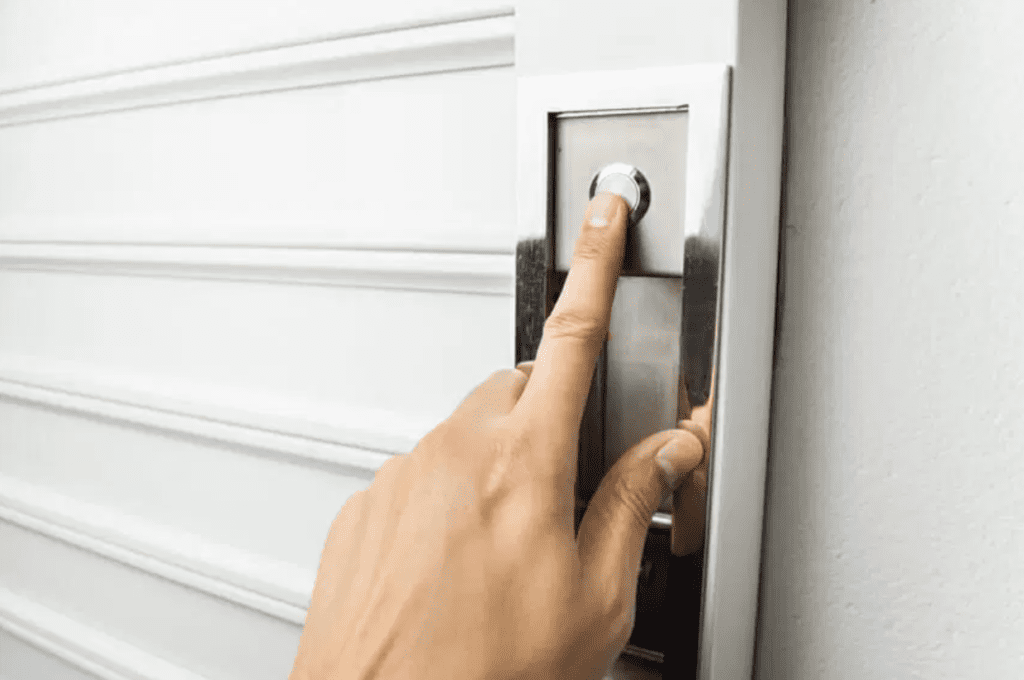
Garage door locks are primarily distinguished by the type of handles they have. Generally, the types of locks available are;
1. Locks with standard garage door T-handles
The most popular color for this type of garage door lock is gray, although you can also choose between white and black. At the back there is a spindle bar which can be diamond or square shaped. It also has two lugs, which you should use with screws to attach the handle to the garage door. Legs can be short or long.
2. Locks with long plate garage door T-handles
These locks are very similar to standard T handles. The main difference is that this type of plate is longer than standard T-handled locks. The main difference between them is that this lock has four lugs, as opposed to two on its counterpart.
3. Euro operated garage locks with T-handles
These locks have holes in the front of the handles, and typically, use a sliding bar mechanism to lock your garage door.
What additional accessories can you use to protect your garage?
A lock should secure your garage for you. However, if you need accessories to go with the lock, there are plenty of them available. The most common are;
1. Puckery Bolt
These are additional safety devices that you attach to the back of your garage door and are used with coach bolts. Packer bolts have keyhole covers (actions) to protect the lock from harsh weather conditions, and locate the key in the lock.
Pacri bolts protrude approximately 70mm from the door frame and operate with a 4-way crucifix key.
2. Garage guards
Garage door guards are small accessories that are mounted on the ground to hold your garage door back. The device comes in many designs, colors and styles, with black, cylindrical protectors being the most popular.
Garage doors can be locked on all sides, which will provide more protection against the lock being broken. Once set, it rests against the door and keeps it locked. A metal bracket is drilled into the floor with bolts, so the guard doesn’t move with the door.
Garage door guards meet the safety standards of police and insurance companies.
3. Garage bolts
These are devices that you attach to the back of your door so that it can only be opened and closed from the inside. They can be placed on the left or right side of garage doors, as well as behind the door frame. Garage bolts can be of the locking or non-locking type.
4. Electric key switches
These types of switches are useful in opening and closing electrically controlled garage doors.
What are the basic types of garage door locks and how do they work?
Garage door locks can be divided into two types, manual and electronic locks. Both have their pros and cons that should be considered before purchasing. Of course, there’s nothing stopping you from having manual garage door locks and electronic garage door locks at the same time, but we’d still consider it a “multi-kill.”
How does an electronic garage door lock work?
Lift master, one of the leading garage door opener manufacturers, has designed a unique electronic garage door lock that can be used with some of their more expensive opener models. The lock connects to the garage door opener with low-voltage wires that transmit a signal to engage or disengage the lock. The device itself sits on a vertical track, and when engaged, it blocks one of the garage door rollers, preventing the door from opening. If your garage door opener is compatible with an electronic garage door lock, we recommend investing in one instead of choosing an inexpensive, manual lock alternative. When you press the open button on your remote, the opener automatically disengages the lock and then begins to lift the door. And when you’re closing it, the garage door will lock automatically once it’s fully closed.
Locking your garage door is natural for those who take home security seriously. If your garage and home are connected by an interior door, security is especially important to protect your home and family. Standard garage doors with key-operated manual locks are sufficient for garages that are full of various odds and ends, but if you need an extra layer of security for expensive items, you should consider the next garage security solution. The stage should be considered. If you’re looking for more information on electric garage door security, Safe & Secure has created this handy guide.
Electric garage door security
To begin with, it’s good to know that all electric garage doors are supplied with some degree of manual operation to ensure that – in the event of an emergency, or the electronic system breaks down – you can now Also able to operate the door. Similarly, electric garage doors use laser sensors to detect when objects and people are under the door, to guarantee that it doesn’t drop when something or someone is under it. be
If you are interested in electric garage doors for their added security, you can convert your existing garage door to an electric door with a motor and control panel, but only if the door is in good repair. By me and only a few garage door suppliers. A motor, control panel and roller garage door working together is always the best option.
Security features
Today, all types of garage doors come with standard security features that can withstand heavy abuse. However, you can never have too much security. Standard garage doors come with two locks at either corner, and you often have the option of specifying additional locks.
Electric doors are designed so that the locks are powered by the door motor, and can be locked or unlocked at the push of a button. The same motor is designed to continuously push the door downwards into the floor until you activate the release mechanism. This constant pressure is another deterrent to burglars, and is especially effective when paired with a roller garage door.
Roller and sectional garage doors are particularly resistant to forced entry due to their construction and the way they open. Because each end of a roller door is held inside the door frame at all times, it is less susceptible to forcing. Over-and-over doors are less secure in comparison, but improvements in design mean that over-and-over doors are much safer than they were a decade ago.
How to lock an electric garage door.
Early incarnations of electric garage doors relied on basic transmitters and receivers that were weak, as the signals they emitted could easily be mimicked by radio receiver equipment. Modern systems now apply far more advanced technology to ensure that this does not happen. End-to-end encryption and digital fingerprint recognition (in some examples of smart garage doors) mean that owners of electric garage doors are enjoying a new level of garage door security. For a modern lifestyle and added security for your home, consider the many benefits of an electric garage door.
Safe & Secure are specialist manufacturers and installers of roller garage doors, roller shutters, security shutters, fire doors and steel doors and we deliver throughout North Wales and Northern England. With over 30 years of industry experience, our team of expert installers provide a prompt and complete service for domestic and commercial customers looking for smart and secure doors and shutters. For complete peace of mind, we also offer a 24-hour emergency repair service, so you’re never left without your property protected. For more information on any of our products and services, contact our friendly team today – they’ll be happy to help.
What are the benefits of electronic garage door locks?
If your garage door opener is compatible with an electronic garage door lock, we strongly recommend that you select it over manual. Your garage door opener will always automatically open and lock it again at the right time. This will eliminate human error while still providing an extra level of security. Some garage door openers also come with an electronic lock as a set, so if you’re thinking of upgrading, the Lift master 8500W would be a great option.
How does a manual garage door lock work?
Manual garage door locks come in a variety of designs. Some have a small notch and slide into a hole inside the vertical track, ensuring that the garage door cannot be forced open. Others are more complex and have a curved handle that incorporates a mechanism that stops the door from either side. Also, some manual garage door locks can only be operated from inside the garage, while others have exterior access with a special key that unlocks the door. Regardless of the design of the manual garage door lock, the main idea is to prevent forced entry into your garage. In general, manual garage door locks are becoming less popular because most garage door openers do an excellent job of preventing forced entry, even without a special lock.
What are the disadvantages of manual garage door locks?
The biggest downside to a manual garage door lock is that it’s easy to forget to open it before hitting the open button. As a garage door repair company, we often receive service calls after such incidents. The consequences of forgetting to unlock your garage door can be disastrous. For example, if your garage door opener starts to lift the door while it’s locked, you’re running the risk of dislodging your operator’s internal gears or messing with the limit settings. But, in more severe cases, even the door is damaged to such an extent that it has to be replaced.
Some homeowners install an interior lock before leaving for a long vacation to ensure no one breaks in while they’re away. However, it is important not to forget to open it first after returning home. Otherwise, the repair bill can be expensive.
Garage door lock options for added security
1. Automatic garage door locks and lockable openers
Instead of installing a separate lock due to the risk of your door, there are auto-locking garage door opener options. Some opener brands offer openers that are compatible with automatic slide locks or deadbolt locks so you don’t have to worry about damaging your door. Slide locks can be used universally on any sectional door, so we recommend them over deadbolts. They’re also a great investment because you don’t have to replace the door or opener to install them.
We recommend finding an opener that is compatible with automatic slide locks before installing a separate physical lock on your garage door.
Here’s a guide to choosing a garage door opener to help!
2. Securing the door from the outside
You can secure your garage door with an accessible lock from the outside, which is a great way to remind yourself to open the door before using the opener. There are two common ways to lock your garage door from the outside:
A sliding bar lock with L-handle or T-handle, installed as a component of the door.
A garage door defender (stop bar), which is a separate locking mechanism that is bolted to the ground.
3. Saving the emergency release lever
The safest option for securing an emergency release is a garage door armor, which prevents outside access to the lever. It prevents break-ins while giving you access to an emergency release, and it won’t damage your door when you use the opener.
Note: We do not recommend securing the emergency release with zip ties or padlocks. Many online articles recommend locking the emergency release with a padlock or zip ties to prevent the door from opening even if someone gains access to the lever. However, this makes it more difficult for you to open the door in an emergency.
The emergency release lever is designed for your safety. Physically preventing it from working can create a safety hazard for you and your family.
4. Locking the track
Finally, you can lock your garage door from the inside by putting something on the track to prevent the door from swinging. You can either insert something like a padlock into the slots on the track or create a barrier by placing a C-clamp on the track.
This method should be a last resort as it is the most difficult and it is very easy to damage your door if you forget that you have locked the track.
Improving garage door security
For most homeowners, an electronic garage door opener provides enough security as long as you keep your remote safe. However, if you have concerns about the security of your garage door, we recommend installing an automatic garage door lock or an outside locking mechanism before locking the track.
If you need help improving your garage door security, our techs can assess your garage door and work with you to find a reliable security solution. All validation visits include a security inspection and report so you are aware of your door’s vulnerabilities.
Alternatives to traditional garage door locks
But, if you need a more “everyday” lock, what do you do?
Let’s get back to the basics.
The purpose of any lock is to prevent something from being opened when you don’t want it to – that’s at least. In addition, though, the lock should be easy, and not some cumbersome activity if it is not necessary.
Take the lock on your car for example. A large percentage of you reading this right now have a key fob that allows you to lock and unlock your car. Some of you probably don’t even need to click a button… you drive right up, the car knows your key is nearby, and voila.
Now, say when you’re renting a car — have you ever had to go back to the “old school” system of sticking your key in the door? Not fun, right? In and out, unlock and lock, every, one, time.
It’s the same with manual garage door locks. You have an automatic door. You have an opener that allows you to open that door with the click of a button. But now you also have a lock to physically open before you leave.
There has to be a better way, right?
(Hint: There is!)
But first, think about how criminals get in through garage doors. With a typical automatic roll-up door that many homes have, thieves target the safety release mechanism by sticking a coat hanger on the door, reaching for the emergency release, and disabling it with a small tug. Access your garage. (Yes, it is!)
Now, when you think about the manual lock examples above, they mostly work by stopping the garage door from moving its track, and thus locking it in its current position.
So, then, the only other way to “lock” your door from opening when you don’t want it open is to protect that cord from access.
A good garage door lock should be an integral part of your overhead door protection plan. Be sure to check out our article on types of overhead door protection.
Zip Ties (Hint: Not a Viable Substitute)
Given the simplicity of the solution, it is often recommended to zip tie the garage door lock mechanism to prevent the release cord from sliding down.
The whole idea of ”locking” your garage door is done in the name of security, regardless of whether such action violates federal regulations (UL 325). Thus, manipulating a piece of equipment held as a safety measure is akin to cutting off your nose to disfigure your face.
So, while a zip tie is sometimes recommended for securing a garage door lock mechanism (as is removing the cord entirely) we definitely don’t recommend it.
Garage Shield
With everything mentioned above, we are looking for a locking solution that doesn’t require manual work every time you want to leave and return home, while not compromising your overall security. As just mentioned, right?
A garage shield works in exactly the same way—a shield that prevents coat hangers or hooks from reaching the emergency cord. It’s an easy install in minutes, allows for the normal use of an emergency cord, and allows you to use your garage door as intended—without the need to manually lock and unlock it each time you use it. It’s a garage door anti-intrusion device that also allows you to go about your day efficiently.
Finally, when it comes to locking your garage door, you have options. With each, do your due diligence when evaluating your situation and needs—from convenience to safety, the overall security of your garage and your garage access points, and of course, your valuables inside. And protecting loved ones. .
Be sure to check out Garage Shield. This provides an added layer of security as well as peace of mind against garage break-ins.
How to keep your garage door keys safe?
Garage door keys can be easily misplaced. However, the fear is that anyone who knows the stamped key number can extract a new one. We recommend that you grind the code onto the key and keep a note of the key number instead.
Finally, a good garage lock is essential for your home. You can use them with other accessories to fully guarantee the safety of the things stored in your garage.
To lock and unlock your garage door from the outside, you need to install three products:
Side lock (SK7115) for locking the garage. Also known as slide bolts or locking side latches.
An external handle (SKT9303), to lock the sliding bolt from the outside.
A lock cylinder (SK278), to open the sliding bolt from the outside.
Ingredients
The SK7115 is a universal sliding garage door lock, mounted on the inner surface of the garage door. It has three levers:
The sliding bolt, which locks the door.
Vertical spring-loaded release lever with flat slot. It snaps into place when extended blocking the bolt in the locked position, and unlocks the bolt when released.
A diagonal spring-loaded operating lever next to the square slot. It can be used to extend the bolt, either manually from the inside or using an external handle.
Locking and unlocking from the inside
If you only install the SK7115, you can lock and unlock your garage door from the inside.
To lock it, push the sliding bolt out. You can also use the operating lever.
To open it, push the release lever away from the track (toward the center of the door).
The sliding bolt should open automatically. If it doesn’t, you can manually retract it by holding the release lever in the open position.
Locking the door from the outside
To lock the slide lock from the outside, you must install a lock handle with a spindle in the square hole next to the operating lever.
Once installed, turn the handle 90 degrees to lock the slide lock. This will turn the operating lever and raise the bolt to the locked position. The door is now closed.
Note: The outer handle alone cannot open the side lock. The bolt is now held in place by the release lever. The bolt cannot be unlocked from the outside without adding a lock cylinder to activate the release lever.
To open the door from the outside
To unlock from the outside, you must add a lock cylinder, installing it so that the spindle fits into the flat hole next to the release lever.
Once installed, insert and turn the lock cylinder key. This will actuate the release lever, and the bolt should open. If the bolt does not open automatically (often due to friction between the bolt and the track), you can use the handle to retract the bolt while keeping the key unlocked.
Summary: To lock and unlock from the outside, you need three devices: a side lock, a handle to lock, and a lock cylinder to release/unlock.
Warning:
If you have installed a lock handle or lock cylinder, do not lock your garage door from the inside unless you have another exit. You cannot unlock the slide lock manually if it is attached to the lock handle or cylinder.
Tips to Prepare Your Garage Door for Winter
Garage door colors
As a homeowner, your garage is a part of your home that is essential for ingress, egress and security of your car and appliances. You can use it all the time and sometimes more in seasons. It is an important feature of your home that is expected to function when needed.
However, as the seasons change, so does the longevity of the garage door. Winter is a tough weather change that can wreak havoc on garages if not managed properly. So, to protect your home and garage investment, here are some standard winter garage door maintenance tips and get your garage door ready for winter.
Observe the garage.
To continue preparing your garage, you should first observe the entire door in action and stopped. You need to see if it is running well or if it seems to be struggling. A good way to start is to observe the door opening and closing, and ask yourself if it moves smoothly in all directions.
You will need to observe if there are any strange hissing or scratching noises. Many doors that require maintenance have grinding noises or jerking movements. You may also notice that the door is out of alignment, in motion, and stuck. These are all signs that you need to pay attention to it and some garage winterizing will help.
Checking of nuts, bolts, rollers, and hardware
Since your garage is one of the most used exits and exits during the year, checking the durability of the hardware is important. Each nut, bolt, and roller all have key functions to allow your door to function properly.
At this stage, you may need to focus on small components at each corner of the door to tighten it or see if anything needs to be replaced. Many homeowners will usually replace the rollers or have to adjust the brackets and bolts with your tools.
Adjustable and lobbing hardware
Since you’re already in the process of checking the hardware, making sure it’s lubricated is the next step in winter maintenance for your garage door. Adding lube will give the components a smoother operation for seasonal changes. It will also help prevent grinding and scratching.
Most homeowners will talk to an expert to do this, as it can be time-consuming or wasteful if you don’t know what needs attention, like springs or roller parts. However, you can also adjust the hardware while adding lubricant to the moving parts to make winterization easier.
Winter garage door with weather strips
There is a seal strip at the lower end or under the garage. To prepare it for winter is to check for any cracks or tears. If you notice that it is damaged in any way, it is wise to replace it.
The strip is on the door to prevent outside elements such as dust and debris from entering your home. Make sure to have the right striping as there are different types of doors. If you don’t know what type of striping you have, contact your local garage specialist to help you get the right one.
Make sure the door is secure.
There are many components that allow a garage to operate safely. Some have cables, rollers and auto reverse features. All of these play a big part in keeping you safe while the door is moving. Check your garage door winter maintenance safety before it’s too late and someone gets hurt to make sure they’ll work properly in the winter.
The rollers should not have any cracks or chips, and the best way to keep them safe is to maintain or replace them twice a year.
Cables are tension or garage. They are the ones who raise and lower the door. It is never advised that anyone who is not a professional mess with cables, as they provide enough force that can injure or kill a person. You can easily just look and see if there are broken straps or damage near the roller bracket.
Finally, most garages have an auto-reverse feature that prevents the door from closing when an object or person is underneath it. If it doesn’t recognize that something is in line for the door to close, the feature needs to get serviced immediately.
Inspecting doors and cleaning tracks
A professionally maintained door has tracks located on both sides of the door that are completely clean. They need to be free of dirt and debris to ensure precise operation. A good tip to follow is to make sure the tracks are clear of any random objects or debris.
Professionals will use a level to make sure the balance is stable when they check the tracks, but again, when you plow any part of your garage
Garage Lock Frequently Asked Questions (FAQ’s):
What is SureLock?
SureLock is the best way to actually “lock” your garage door!!
** Garage Door Lock = Garage Security **
You should deadbolt your garage door, just like your deadbolt your front door!!
Why do automatic garage doors need an automatic garage door lock?
First and foremost, your garage door opener doesn’t actually lock your garage door, most people just assume that because they lock their garage door with the garage door opener there. There are – this is not true at all – this means that the greatest access is the weak point of your home.
Known as the “6-second break-in,” a burglar only needs 6 seconds to break into a home through an automatic garage door not secured by a garage door lock.
(Aka: Deadbolt).
And when users secure their garage door with a manually operated garage door lock (slide bar, padlock, etc.) it interferes with and reduces the convenience of opening the garage door, because the garage The door must be opened manually before opening automatically. and then manually locked after automatic shutdown.
Advantages:
SureLock has set a new standard for securing automatic garage doors by providing the following unique benefits and features:
Gives customers peace of mind that the largest and most used door in their home is Deadbolted when closed!
Automatically locking the sectional roll-up garage door every time, you close it, and unlocking it again every time you open it
Plug-n-play integration with any garage door opener
Works using all existing garage door opener controls.
Manual release capabilities are provided.
Mounts on the garage door track inside the garage, on either side of the door.
Designed to be installed inside the garage to avoid visibility from outside the garage and therefore risk of tampering.
2” clearance is required between the door track and the first obstruction such as a wall or cabinet.
Replaces all locks needed to secure an automatic garage door, (such as a manually operated slide bar).
How does SureLock provide automatic garage door users with convenience and garage door security?
Installed inside the garage, SureLock works with a garage door opener to automatically lock your home’s garage door every time it closes and unlock it every time it’s opened.
SureLock enables users with automatic garage doors to combine convenience and security, so they no longer have to sacrifice one for the other.
Can I still use my existing garage door opener controls?
Yes, SureLock is operated by existing garage door opener controls.
How applicable is SureLock to different types of garage doors and garage door openers?
The SureLock universal design is used to secure any sectional roll-up garage door equipped with any garage door opener.
Types of garage doors:
SureLock is designed to work with:
– Sectional / sectional roll up garage doors
SureLock can be used with:
– Roll up garage doors
– Slide on side garage doors.
– Side hinged garage doors
– Tilt/up and retractable garage doors
SureLock does not work with:
– Canopy garage doors tilt/up and up
Will SureLock garage door openers work with a backup battery?
Yes, SureLock is designed with additional connections for battery operation.
How long does it take to install SureLock?
The time required to install SureLock is usually less than 1 1/2 hours for most people with basic skills and tools. A typical time for a professional is around 20 to 30 minutes.
Can the SureLock be manually released in the event of a power outage?
Yes, SureLock is equipped with a manual release lever.
What is SureLock made of?
SureLock is made from heavy duty steel.
What are the physical dimensions of SureLock?
SureLock is 10″ x 2″ x 2″ (Length x Width x Depth)
Will SureLock resist a forced entry attempt?
SureLock will usually withstand more force than the door it is securing.
Will bad weather affect SureLock?
Extreme weather conditions have not shown any effect on Sure Lock’s ability to function.